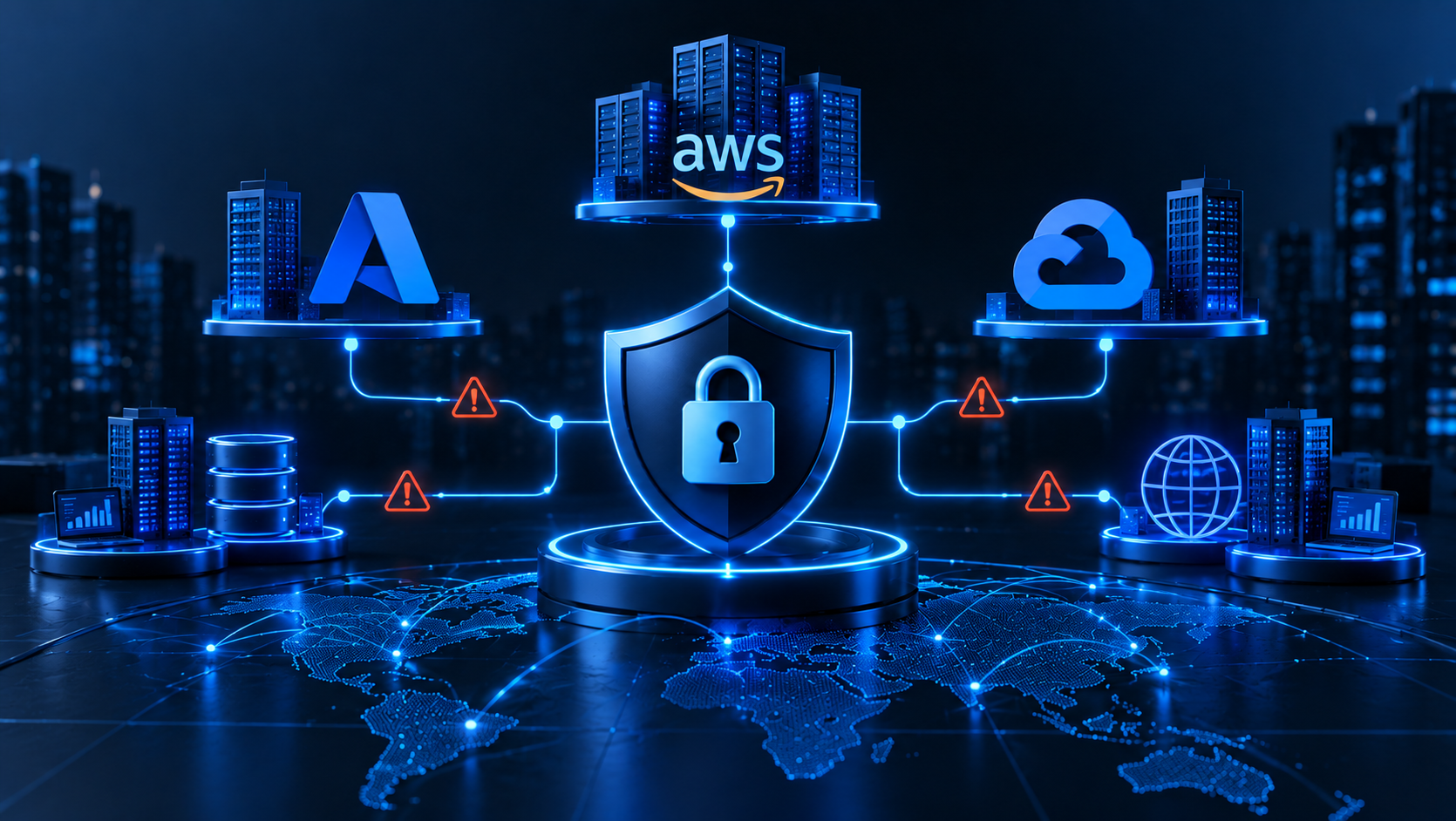


Fragmented Visibility Creates Hidden Problems
Modern enterprise networks rarely live in one place anymore. Users may connect from branch offices, home networks, mobile devices, and customer sites, while applications and workloads are spread across SaaS platforms, private infrastructure, Microsoft Azure, AWS, Google Cloud, and third-party services. The problem is that visibility often remains fragmented across separate tools, dashboards, providers, and teams. One platform may show cloud performance, another may track branch connectivity, and another may monitor security events, but no single view explains how the entire environment is behaving together. That creates blind spots where latency, routing issues, access problems, and configuration gaps can sit unnoticed until they start affecting the business.

Troubleshooting Becomes Slower and More Expensive
When visibility is fragmented, troubleshooting becomes a process of elimination instead of a clear diagnosis. IT teams may spend hours checking cloud services, firewalls, WAN links, SaaS providers, endpoint devices, and internal applications just to determine where a performance issue actually started. In hybrid and multi-cloud environments, one user complaint can involve several different networks and providers before traffic reaches its destination. Without centralized visibility, teams often lose time moving between tools, comparing logs, and asking different vendors to investigate their part of the connection. The longer it takes to identify the source of a problem, the longer users experience disruption and the more expensive that incident becomes in lost productivity and support time.

Security Gaps Can Hide Between Environments
Network blind spots are not only a performance problem. They can also create security risk. When traffic moves between cloud environments, SaaS applications, branch locations, remote users, and private infrastructure, inconsistent monitoring can make suspicious activity harder to detect. A connection may appear normal within one environment while creating unusual behavior somewhere else. If teams cannot easily see how identities, devices, applications, and data move across the network, it becomes harder to recognize unauthorized access, unusual traffic patterns, or weaknesses between different security controls. In many cases, the first sign that something is wrong comes from a user reporting an issue rather than from the network or security team identifying it proactively.

Centralized Visibility Turns the Network Into Something You Can Manage
A modern network needs more than connectivity. It needs enough visibility for teams to understand what is happening across the entire environment before problems reach users. Centralized visibility helps connect performance, routing, cloud, security, and user experience data so IT teams can identify patterns faster and make better decisions about where to investigate or optimize. It also reduces dependence on guesswork and makes it easier to understand how one change in a cloud platform, branch network, SaaS application, or provider affects everything else. If your team is spending too much time chasing issues across disconnected tools and environments, talk to Prism IP’s network experts about creating a clearer, more centralized view of your infrastructure so problems can be identified before they become business disruptions.